

Bright Smiles Logo
  • Pay my bill
  • Patient login
  • Blog
  • Contact
  • Dentistry Careers
  • Emergencies
  • Locations
    • I have a dental issue
    • Emergency Dentist
    • General Dentistry Services
    • Gum Treatment
    • Root Canal & Endodontics
    • Sleep Apnea Treatment
    • Tooth Extractions
    • I want to improve my smile
    • Cosmetic Dentistry Services
    • Dental Implant Services
    • Fillings, Crowns & Bridges
    • Full Dentures & Partial Dentures
    • Invisalign®
    • Porcelain Veneers
    • Teeth Whitening
    • I need a check up or cleaning
    • Children's Dental Care
    • Dental Exams & Teeth Cleaning
    • Dental payment options
    • Dental insurance
    • Smile Alliance Club
    • Dental financing
    • Special offers
    • Medicare Advantage
    • Good faith estimate
    • About us
    • Patient information
    • Dental reviews
  • Book appointment

Home

Blog

Teething Isn’t Child’s Play

Mommy holding baby up in air

December 1, 2018 By Bright Smiles Family Dentistry

Teething Isn’t Child’s Play

Your baby was born with all 20 primary teeth below their gum line just waiting to make their appearance when your baby is around 4-7 months old. The teething process starts before their first tooth pokes through the gum, and teething symptoms can appear when your child is as little as three months old.

It can be frustrating and painful for babies because they don’t understand what’s happening and even more so for parents who have no way of explaining what’s going on.

The two bottom front teeth are usually the first teeth to come in, followed by the two top front teeth. While every child is different, all 20 baby teeth are usually present by your child’s third birthday.

Possible Signs of Teething

Smiling baby with new teeth


  • Drool, lots of drool – Teething can stimulate saliva production, and most babies haven’t fully mastered the swallow reflex until they are at least 18 months old.
  • Increased fussiness or other behavior changes – Some parents notice a correlation between a cranky baby, crying spells, and a lack of appetite with a child that’s ready to cut a tooth. If your mouth hurt and you didn’t know why, you’d be cranky too!

Soothing the Symptoms

There may not be a way to eliminate the discomfort caused by teething, but there are some ways to make life a little more comfortable for your baby.

Prevent facial rashes and chapped skin by regularly wiping your baby’s face with a soft, cool cloth.

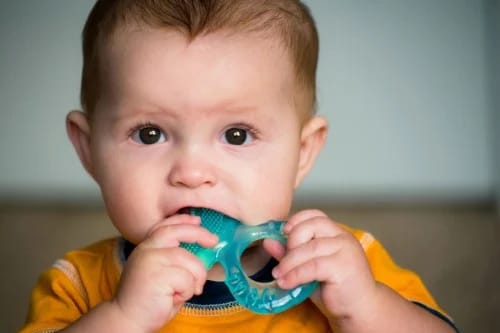
Some babies find that biting down or chewing something hard helps. A plastic teether might help relieve some of the discomfort. Be sure its solid. Avoid teethers with liquid inside because they may break or leak. If you chill it, chill it in the refrigerator, NOT the freezer.

Massaging your baby’s gums with a clean finger can help relieve teething symptoms, too.

If your child seems to be in a lot of pain, contact your doctor to see if there could be another reason for your child’s discomfort.

A Short List of Don’ts

It’s also worth mentioning a few things that despite popular myths, should not be done if your child is teething.
  • Never boil a teether to clean it because it could cause chemicals to leach out or alter the composition of the plastic. NEVER give your child necklaces with stones in them to chew on. Metal in the chain may contain lead and stones are a choking hazard. Also, don’t tie a teether to your child’s clothes because it could get caught and pose a strangling hazard.
  • Never rub child aspirin on a child’s teeth or give pain relievers without checking with your child’s pediatrician or dentist.
  • Never rub alcohol on your child’s gums.
  • Don’t use teething gels or tablets on babies under two. According to this article released by the FDA, benzocaine, the active ingredient in many children’s teething products, poses more risks than benefits.
Baby with teething ring


Some parents feel that fever and diarrhea are also symptoms of teething. While tender and swollen gums could make your baby's temperature a little higher than normal, teething doesn't usually cause high fever or diarrhea.

If your baby has a fever or experiences regular bouts of diarrhea, teething may not be the cause, and you should contact your pediatrician for an exam.

It’s important to mention that some parents notice a correlation between their child teething and one or more of these symptoms, while other children don’t exhibit any symptoms of teething. Every child is different. With a little patience and some extra snuggles, your baby will get through this trying stage of development, and the discomfort they experienced and the sleep that was lost will soon be just another entry in their baby book.

Recent articles

Healthy Snack Choices for Healthy Teeth
Make taking care of your smile something you do everyday, and not just a new year’s resolution.
Mom teaching daughter how to brush teeath Tips for Teaching Teeth Brushing

Book your appointment today.

Book appointment
Bright Smiles Logo KO
  • Bright Smiles Family Dentistry in Marble Falls
  • Bright Smiles Family Dentistry in Pflugerville
  • Children's Dental Care
  • Cosmetic Dentistry Services
  • Dental Exams & Teeth Cleaning
  • Dental Implant Services
  • Emergency Dentist
  • Fillings, Crowns & Bridges
  • Full Dentures & Partial Dentures
  • General Dentistry Services
  • Gum Treatment
  • Invisalign®
  • Porcelain Veneers
  • Root Canal & Endodontics
  • Sleep Apnea Treatment
  • Teeth Whitening
  • Tooth Extractions
  • Find a dentist near you
  • Privacy policy
  • Notice of Privacy Practices
  • Site map

© 2026 Bright Smiles Family Dentistry. All rights reserved. The above-listed practice complies with applicable Federal civil rights laws and does not discriminate on the basis of race, color, national origin, age, disability, or sex. Notice of non‑discrimination.

(830) 743-9574
(512) 593-7390